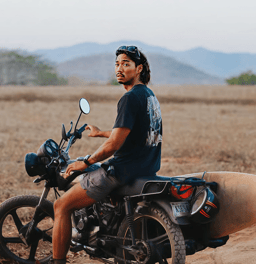
And I still eat at the cheapest spot on the block.
I make $24,000 a month and I argued with myself for fifteen minutes about whether to order a second coffee.
Not because I couldn't afford it. Because something in my chest tightened when I thought about spending three euros on something I didn't strictly need.
My mom used to wash and reuse Ziploc bags. Not because she cared about the environment. Because bags cost money and money was the thing standing between her nine kids and the kind of trouble she'd seen growing up in Manila. She'd flatten them on the counter, dry them on a dish towel, fold them back into the drawer. I watched her do it a thousand times and never once thought about it until I caught myself in a hostel kitchen in Porto doing the exact same thing with a sandwich bag from a corner store.
I have more money sitting in my account right now than my parents made in any five-year stretch of their lives. And I still flinch when I swipe my card.
That's the trap. You build the financial life everyone talks about. The money comes in. The dashboards are green. You don't owe anyone a thing. But the nervous system you developed during twenty years of not-enough doesn't update when your income does. Your body keeps running the old software.
When I ran my logistics company, being cheap made sense. Margins were razor thin. Payroll came every two weeks whether the clients paid or not. Every dollar I didn't spend was a dollar that kept the lights on for my crew. Being tight wasn't a personality flaw. It was the job. I drove a truck with a cracked windshield for eight months because the quote to replace it felt like too much.
After I sold the company and ended up delivering burritos at 35, being cheap was survival. I counted coins at the register. I knew the price of every item at the grocery store the way other people know their kid's shoe size. That kind of awareness doesn't feel like stress when you're in it. It feels like competence. Like you're good at being broke.
But the money's different now. It shows up whether I leave the apartment or not. Three separate streams. Predictable. More than I need. And I still eat at the cheapest spot on the block. Still stay in hostels when I could rent a decent place. I told myself it was a choice. Minimalism. Intentional living. All the words that sound like philosophy but are really just fear wearing a better outfit.
Last month I sat down at a restaurant in Porto. Just me. Not a celebration. Just dinner. I opened the menu and ordered the cheapest thing without reading a single other line. Didn't even register what it was. The waiter walked away and I sat there realizing I hadn't looked at what I wanted. I'd looked at prices. Right side of the menu first. Always.
That's what two decades of not-enough does to you. It doesn't vanish when the numbers change. It moves into your hands. Your eyes. The way you scan a menu from the right column before you ever read a word on the left.
You know this one. Maybe you can afford the direct flight but you book the connection with the six-hour layover because it saves $130. Maybe you have the money for your own apartment but you keep the roommate because spending more on rent feels reckless even though you make ten times what you did when you first moved in. Maybe you bought something you actually wanted and felt sick about it for three days afterward even though it barely touched your balance.
The internet calls this a scarcity mindset. Like it's a setting you can switch off. Read the right book. Do the journaling exercise. Rewire your relationship with money. But it's not in your head. It's in your hands when they tighten around a cup of coffee that cost three euros. It's in your stomach when the check comes and your whole body braces like you're about to get hit even though you could cover it fifty times over.
I'm not through it. I don't know if you get through it. But I've started doing one thing that helps and it's so small it's almost embarrassing.
I order the second coffee. Every time. No negotiation. No checking my balance first. I just order it and sit with whatever my body does in response. Some days it's nothing. Some days my hands tighten around the cup like someone's about to take it away.
My dad stood in the sun on construction sites for thirty years so his kids could have more than he did. I do. I have more than he probably imagined. But having the money and letting yourself have it are two completely different things.
The money was never the hard part. Believing I'm allowed to enjoy it might be the hardest thing I've ever done.
— Best, Jose